Browser games · New game
Song of Ashes|灰燼之歌:Historical Battles Demo
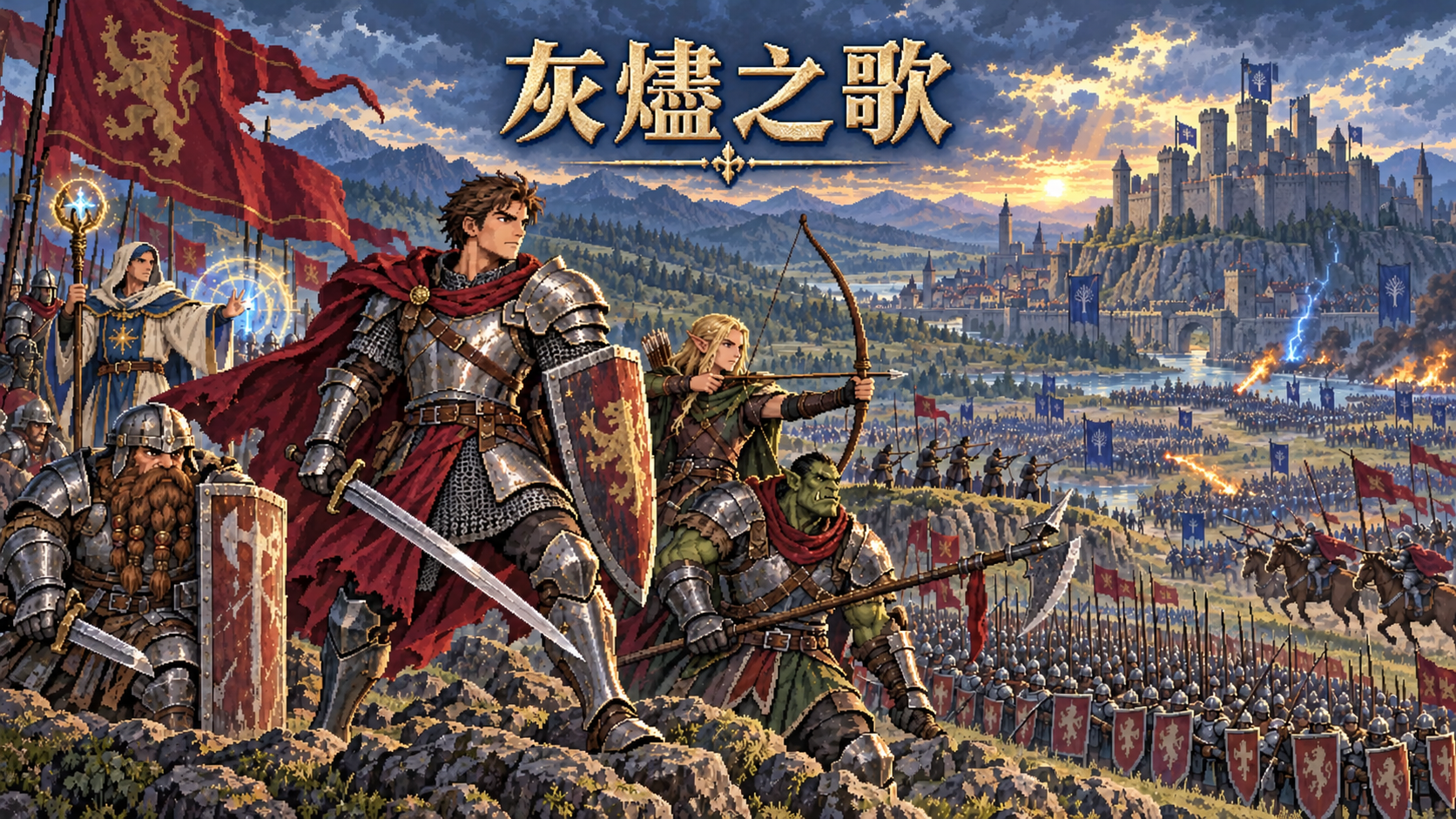
Song of Ashes: Historical Battles Demo is a free browser game mixing real-time action with army command across twenty battles, with commander creation, crest design, pikes, cavalry, and elite guards.
Playable frame from itch.io. If it does not load, open the game on itch.io.
The short answer
Song of Ashes: Historical Battles Demo is a free browser real-time action and army-command game. It offers 20 battles across history: 10 tactical engagements where terrain and troop types matter, and 10 heroic musou battles with a small elite guard. Create a commander, choose a portrait, name a company, and carry a custom crest into battle.
What is Song of Ashes: Historical Battles Demo?
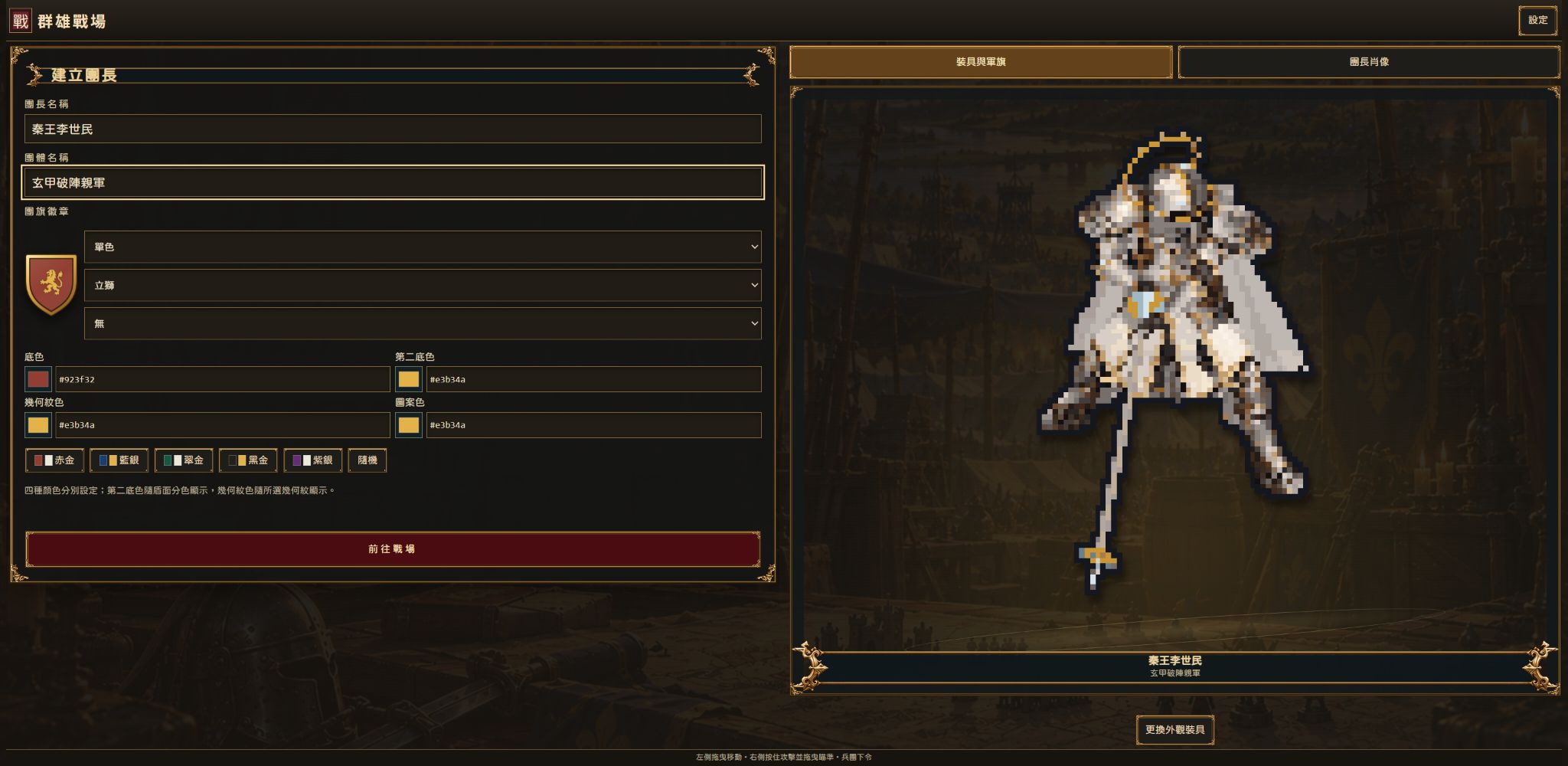
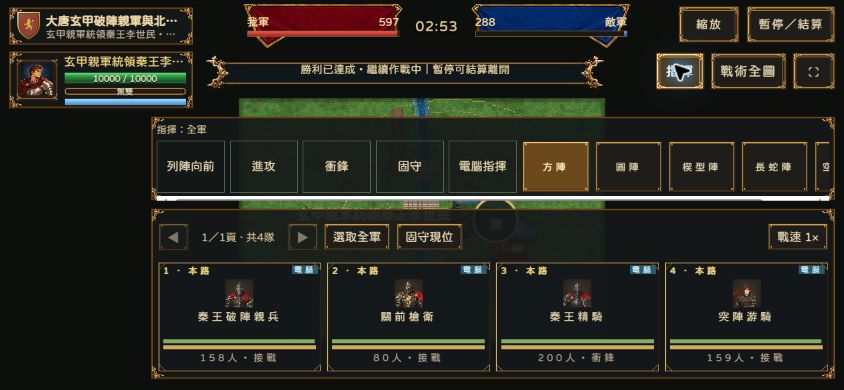
Song of Ashes: Historical Battles Demo from JUMO GAMES is a free browser-based blend of real-time action and army command. It is in development, and the playable HTML5 build presents twenty battles drawn from history, split evenly between two styles. Ten tactical history battles put an outnumbered force under the player's direction, with pikes, shields, missiles, cavalry, terrain, and lieutenant commands shaping the fight. Ten heroic musou battles take a different angle: the player controls a powerful commander accompanied by a small elite guard. The historical figures named for this mode include Xiang Yu, Zhao Yun, Huo Qubing, Wei Qing, Chen Qingzhi, Li Shimin, and Yue Fei. Before the fighting begins, the player creates a commander, picks from forty portraits, names a company, and designs a heraldic crest that appears on banners and shields. The demo is played in a browser on desktop and landscape phones, with touch movement, attacks, and command controls included. A tactical map supports formation selection, command of the player's own front, and direct control of lieutenants' units. The demo includes a field manual, battle objectives, and achievements.
How to play
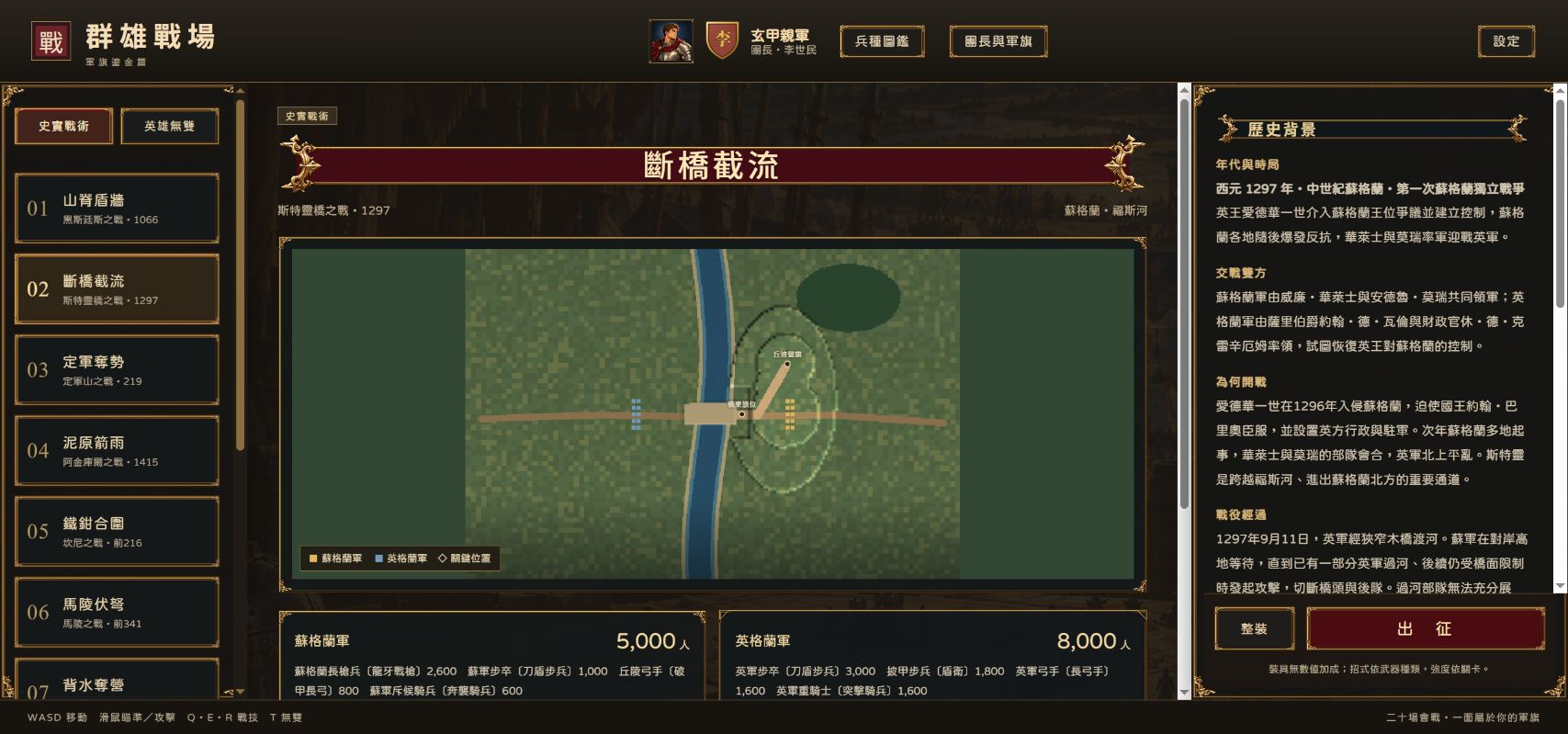
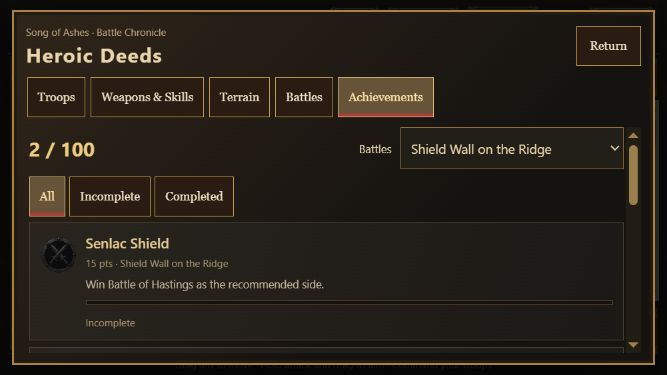
Play begins with a commander and a company rather than a preset hero. Choose one of forty portraits, give the company a name, and build a crest that is carried onto banners and shields. Equipment can be assembled from eight sets; weapon types change moves and skills, while appearance equipment supplies no stat bonuses. The battlefield splits into two formats. In tactical history battles, the force is outnumbered and must use pikes, shields, missiles, cavalry, terrain, and lieutenant commands to win. A tactical map lets the player select formations, command their own front, or take over a lieutenant's units. In heroic musou battles, the player fights as a powerful commander with a small elite guard. Every battle carries its own era, opposing armies, causes, course, historical outcome, tactical advice, and objectives. A field manual covers troops, weapon skills, terrain, and battles. Each battle also offers five distinct achievements, for a total of one hundred, shown with bronze, silver, and gold medals.
The loop is therefore part preparation, part in-battle command, and part historical study: build a force identity, read the objectives, use the tactical map, and pursue the battle's achievement set.
Controls
Song of Ashes: Historical Battles Demo is played in a browser, with desktop and landscape-phone layouts. Touch movement, attacks, and command controls are included for phone play. The tactical map is the command layer: it is used to select formations, direct the player's own front, or take over a lieutenant's units. Settings can switch between Desktop and Phone Landscape modes, and between English and Traditional Chinese. Progress is saved in the current browser. The control design separates direct action from army command. Movement and attacks are touch inputs, while command controls and the tactical map handle formations and unit direction. Because Phone Landscape is an explicit mode, the phone layout is intended for a sideways hold. Desktop mode is also selectable, and the language choice sits alongside the interface switch. This makes the control layer a mix of hands-on fighting and higher-level ordering.
| Input | Action |
|---|---|
| Touch | Move |
| Touch | Attack |
| Touch | Use command controls |
| Tactical map | Select formations, command the player's own front, or take over lieutenants' units |
Tips for your first run
The first run should begin with the field manual, which covers troops, weapon skills, terrain, and battles. It gives context before the tactical map and achievement list compete for attention. In tactical history battles, the outnumbered force depends on combined arms: pikes, shields, missiles, cavalry, terrain, and lieutenant commands. Terrain features named for these fights include ridges, river bridges, and passes. The tactical map is not only a formation screen; it is where the player commands their own front or takes over a lieutenant's units.
- Pick a weapon type for its moves and skills; appearance equipment provides no stat bonuses.
- Mix equipment from the eight sets to support the chosen weapon and battle plan.
- Use the tactical map to hold the main front while lieutenants cover side routes, then take over a unit when direct control matters.
- Check each battle's objectives and tactical advice before committing, because every battle includes both.
- Aim for the five per-battle achievements and the bronze, silver, and gold medal display across the 100 total.
- In heroic musou battles, account for the smaller force: a powerful commander and a small elite guard.
Content and replayability
The content package is built around twenty battles. Ten are tactical history battles with an outnumbered force, and ten are heroic musou battles with a powerful commander and a small elite guard. The heroic roster includes Xiang Yu, Zhao Yun, Huo Qubing, Wei Qing, Chen Qingzhi, Li Shimin, and Yue Fei. Each battle supplies its era, opposing armies, causes, course, historical outcome, tactical advice, and objectives, so replay can focus on a different layer each time: the historical situation, the tactical problem, or the objective set. The field manual adds another reference layer for troops, weapon skills, terrain, and battles. Achievements extend the loop: five distinct achievements per battle, one hundred in total, displayed with bronze, silver, and gold medals. Commander creation adds a personal through-line with forty portraits, a named company, eight mixable equipment sets, and a heraldic crest carried onto banners and shields. Weapon types change moves and skills, while appearance equipment has no stat bonuses, so the visual build and the functional build are separate choices.
Progress is saved in the current browser, which supports return visits on the same browser. The demo's content is structured around discrete battles and per-battle achievements.
Presentation and performance
Presentation begins with the commander. Forty portraits are available, and the chosen crest is carried onto banners and shields, making heraldry part of the battlefield look. Eight equipment sets can be mixed, with appearance equipment separated from stat bonuses and weapon types driving moves and skills. The historical framing is explicit: tactical battles use pikes, shields, missiles, cavalry, and terrain, while heroic battles center on commanders such as Xiang Yu and Yue Fei. The interface supports Desktop and Phone Landscape modes, plus English and Traditional Chinese. First launch follows a supported browser language and otherwise uses English. The playable version is an HTML5 frame that runs in a browser on desktop and landscape phones, with touch movement, attacks, and command controls included. A tactical map provides formation selection and unit command, while the field manual and achievement medals add readable layers around the fighting. The Desktop or Phone Landscape setting makes the interface presentation an explicit choice.
Who should play it
Song of Ashes: Historical Battles Demo suits players who want historical battles with both hands-on action and army command. The tactical history mode is for those who enjoy outnumbered forces, combined arms, terrain problems, and lieutenant commands; the heroic musou mode is for those who prefer a powerful commander and a small elite guard. The named roster, from Xiang Yu and Zhao Yun to Huo Qubing, Wei Qing, Chen Qingzhi, Li Shimin, and Yue Fei, gives history-minded players a clear entry point. Customization-minded players get forty portraits, a named company, eight equipment sets, and a crest that appears on banners and shields. Weapon types change moves and skills, while appearance equipment has no stat bonuses, so players who care about visual identity can build it without mixing it into combat stats. Browser players on desktop or landscape phones can try it with touch movement, attacks, and command controls. The achievement structure, with five per battle and one hundred total, rewards repeat play.
The demo is free to play in a browser, making it a low-commitment way to test whether the historical action and command mix fits.
Screenshots
From the developer
Raise your banner. Rewrite the battle. Song of Ashes — Historical Battles Demo is a real-time action and army-command game. Create your commander, choose a portrait, name your company, and carry your own crest onto banners and shields. 20 battles across history 10 Tactical History battles: lead an outnumbered force and use pikes, shields, missiles, cavalry, terrain, and lieutenant commands to win.10 Heroic Musou battles: fight as a powerful commander with a small elite guard, from Xiang Yu and Zhao Yun to Huo Qubing, Wei Qing, Chen Qingzhi, Li Shimin, and Yue Fei. Each battle includes its era, opposing armies, causes, course, historical outcome, tactical advice, and objectives. Heroic abilities and playable army sizes are adaptations for the game. Your commander, your company Choose from 40 portraits and mix eight equipment sets. Weapon types change moves and skills; appearance equipment provides no stat bonuses. Design a heraldic…
Read the full description on itch.io →Frequently asked questions
Is Song of Ashes: Historical Battles Demo free?
Yes. It is free to play in a browser.
What platforms are supported?
The demo runs in a browser on desktop and landscape phones. Touch movement, attacks, and command controls are included for phone play.
How many battles are included?
Twenty: ten tactical history battles and ten heroic musou battles. Each battle has its own era, armies, causes, course, historical outcome, tactical advice, and objectives.
Can the commander and company be customized?
Yes. Choose from forty portraits, name the company, design a heraldic crest, and mix eight equipment sets. Weapon types change moves and skills; appearance equipment provides no stat bonuses.
Does progress save?
Progress is saved in the current browser.
What languages and interface modes are available?
English and Traditional Chinese, with Desktop and Phone Landscape modes. The first launch follows a supported browser language and otherwise uses English.
Something wrong or missing? Tell us.